

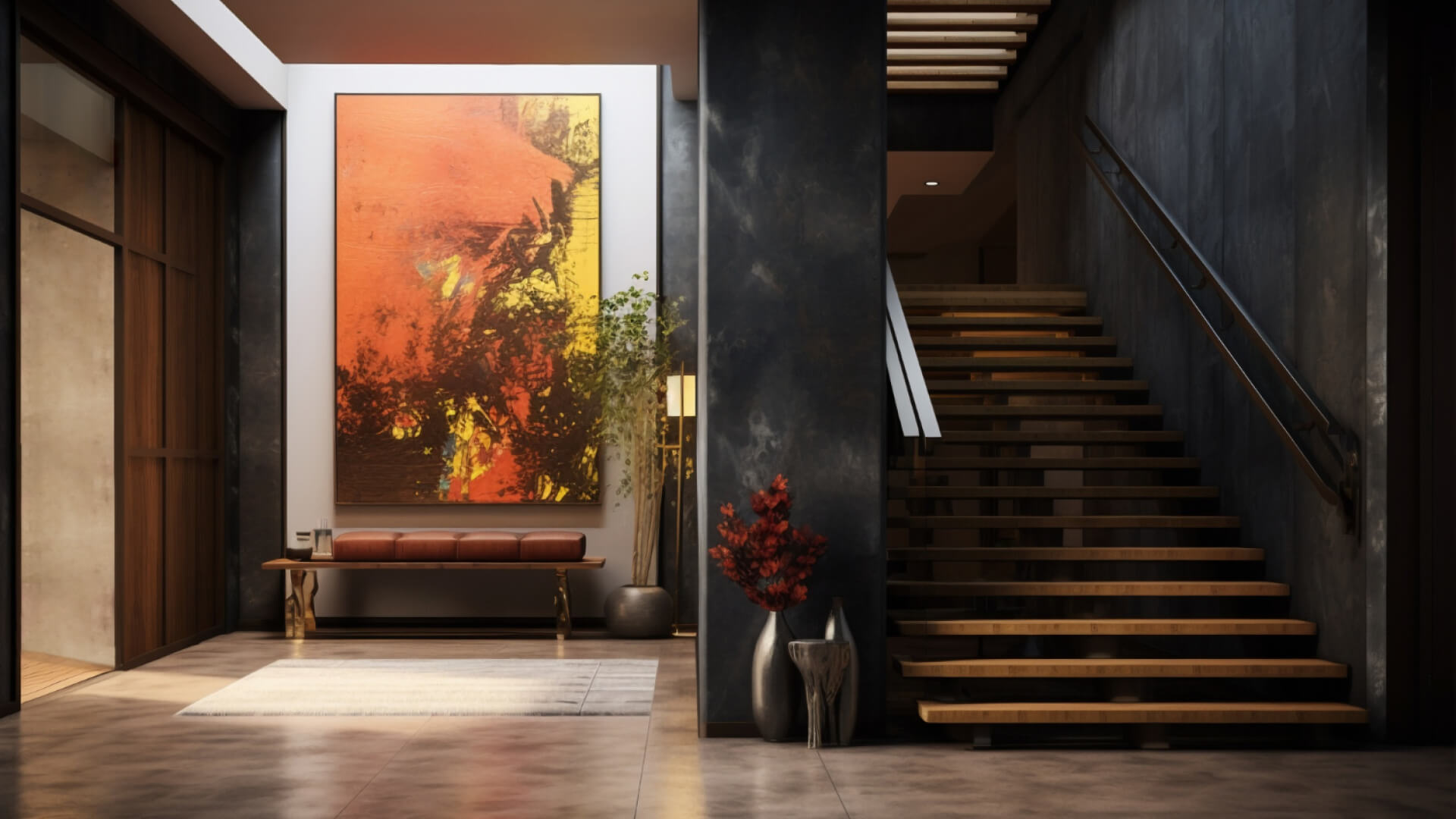
The entrance should work for the people who live there.
There is a distinct moment when you cross the threshold of your home, a moment where the noise of the outside world fades, and the sanctuary of your personal space takes over. While guests experience your foyer as a stylish first impression, for the family living there, it has a much more practical job.
Keys need somewhere to go. Shoes come off. Bags get put down. Someone may pause for a moment before heading into the rest of the house. These small routines happen every day, so a good entrance foyer design should make them easier and feel completely effortless. The best foyers are not always the grandest ones; they are the ones that feel organized, welcoming, and intuitive to use.
Maya Angelou expressed the importance of feeling beautifully when she wrote that people will forget what you said and what you did, but they will never forget how you made them feel. That thought works just as well for a home’s entrance. A foyer should not only look polished, but it should also make coming home feel comfortable, familiar, and instantly restoring.
Start With What Actually Happens Near the Door
Before choosing a console, mirror, or statement light, think about how the entrance is used every day. If a console table is too deep, it can make the walk feel tight and restricted. A purely decorative table without smart storage can quickly become a landing pad for everyday clutter.
A tailored bench or pair of structured ottomans can make taking off shoes easier, while bespoke built-in cabinets or concealed valet drawers can quietly hide away bags, chargers, and daily essentials. Good foyer design ideas usually start with these basics: understanding what needs to be stored, how much space is available, and what people naturally do when they walk through the door. The aim is not to fill the space but to make sure every piece that is there actively serves your daily living.
Keep It Connected to the Rest of the Home
The foyer should feel like part of the home, not a separate design experiment. If the living spaces feature specific colors, warm finishes, or rich materials, carrying those elements into the entrance helps everything feel connected from the moment you step inside.
Honed stone flooring or custom terrazzo works exceptionally well in high-traffic areas while providing enduring elegance. Rich wooden panelling can add depth and warmth, while brushed metal accents introduce a gentle contrast without making the space feel busy. Scale is equally important. A massive marble console could look incredible in the foyer of a large villa, but a slimmer stone ledge or floating piece might be a far better fit for a smaller entryway.
Use Lighting to Set the Right Mood
Lighting can change the mood of an entrance in seconds. Relying on a single overhead bulb often feels cold, whereas layering soft light creates immediate warmth. A double-height foyer could support a dramatic chandelier or sculptural pendant light to anchor the room. In a smaller space, concealed cove lighting or warm wall sconces can create a much softer, more inviting effect.
Mirrors also bounce this ambient light to help the entryway feel open, airy, and bright. Instead of cluttering the space with too many decorative objects, one strong light fixture paired with a well-placed mirror can often be all the space needs. Adding a high-density runner underfoot or a subtle signature scent also elevates the tactile and sensory atmosphere the moment you step inside.
Add Something Personal
A foyer is infinitely more satisfying if it contains something that genuinely matters to the people who live there. It could be a piece of artwork picked up while travelling, a family photograph, a hand-sculpted ceramic object, or a cherished item passed down over time. These personal details stop the entrance from feeling staged or like a showroom, grounding the luxury with authentic character and making it feel like part of the family’s true home.
Design Beyond the First Impression
The strongest entrance foyer design balances appearance with movement, storage, lighting, and everyday use. At LuxDeco, foyer design is considered as part of the complete home, so the furniture, storage, lighting, and adjoining spaces work together naturally. The result is an entrance that feels refined, practical, and genuinely connected to the rest of the home.
FAQs
What is the difference between interior design of apartments and villas?
A villa usually has multiple floors, larger rooms and private outdoor areas. Its design therefore needs to consider movement, proportions, privacy and indoor-outdoor connections.
What should be considered before designing a villa?
The layout, natural light, family routines, storage and outdoor areas should be understood before selecting furniture, materials and finishes.
How to create a cozy feel in a large villa?
Without furniture scaled to the room, layered lighting, functional storage and individual touches, large rooms can feel empty or formal.
Can the interiors of villas be customized for different members of the family?
Yes. Bedrooms, workspaces, study areas and shared rooms can be designed to different routines and a consistent design approach applied throughout the home.
